Recent Work

Graphic created by Julia Smachylo
Forest Plantations as Spatiotemporal Reclamation Strategy
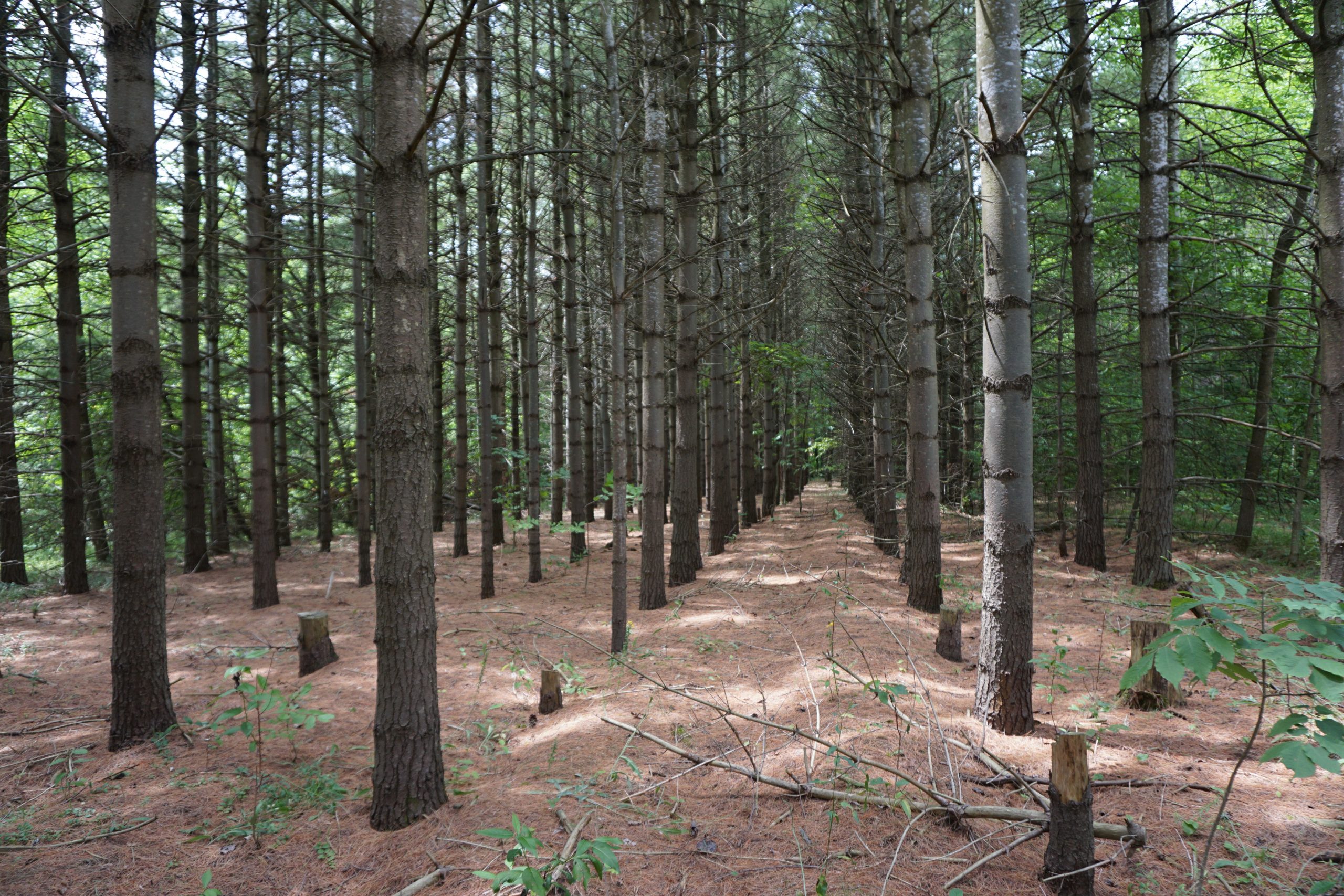
Scattered throughout southern Ontario are traces of afforestation programs that have established a spatial and temporal system of landscape response to environmental crises. In the mid-to late-twentieth century, softwood plantations were used as a landscape approach to soil and forest reclamation by the province of Ontario. Their legacy highlights the ongoing role of state spatial strategies to counter ecological crises.
The book chapter is a contribution to A Landscape Approach edited by Hannes Zander, Shelagh McCartney, Samantha Solano, and Sonja Vangjeli. The book promotes a holistic framework to ground individual places, communities, and habitats in their broad, territorial context and is the second book published by the International Landscape Collaborative ILC, a group of emerging scholars and practitioners interested in issues related to landscape and territory.
https://issuu.com/oro_editions/docs/landscape_approach_watermarked

Ecological Accounting and the Spatial Dynamic of Incentivized Conservation
An investigation into the spatial relationships of market-based environmental management strategies that are producing new material and social relations at multiple scales through forms of regulatory enclosure. The book chapter is a contribution to Nature of Enclosure edited by Jeffrey Nesbit.
Nature of Enclosure (Podcast): Enclosed Boundaries of Political Geographies
The podcast series The Nature of Enclosure, hosted by Jeffrey Nesbit brought together experts from a range of disciplines in design, planning, history, and geography to discuss pressing topics at the intersection of architecture and the environment. Episode 8: Enclosed Boundaries of Political Geographies is a conversation between Julia Smachylo, Mishuana Goeman, and Jeffrey Nesbit discussing regulatory and settler enclosures.
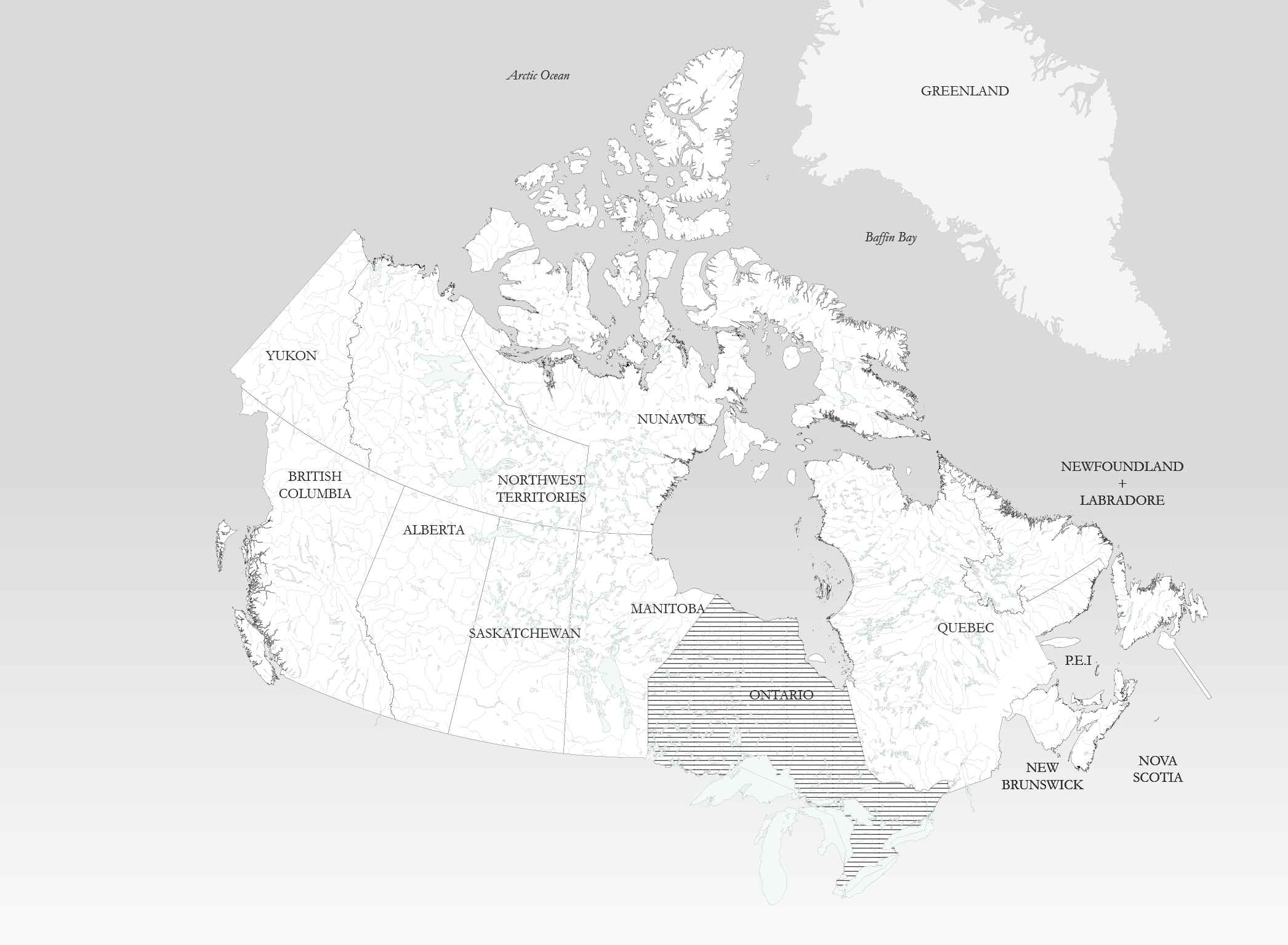
Legible Landscapes: Incentivizing Forest Knowledge and Action in Southern Ontario
This paper traces the changing dynamics of forest management on privately owned land in southern Ontario, Canada, using the conceptual lens of state legibility to highlight how incentive programs are creating new ways of seeing and engaging in stewardship. Specifically, the Managed Forest Tax Incentive Program (MFTIP) and its corresponding Managed Forest Plan, are investigated as a means through which a diversified field of knowledge has been activated to enable climate-conscious adaptive stewardship across the region.

Fallow
Our extended urban fabric is formed through proliferating processes of uneven development—of decline and efforts to recapture neglected and marginal spaces to restore social, ecological, or economic capacity. Arising out of leveraging fallow as a framework, this work examines fallowness as a framework for design, peripheralization, and degrowth to open radical understandings of how landscapes might be envisioned through a different developmental approach—of these cyclic processes of valuation and uneven development that play out across the urban fabric.

Towards a Critical Glossary of Extraction
An interview by Julia Smachylo and Mariano Gomez-Luque with political geographer Martín Arboleda was carried out as part of the “Beyond Extraction” (BE) project – a venue for researchers, writers, artists, and activists to share and collaborate on efforts to critique extraction. In the conversation, conducted over Zoom during late 2020, we discussed his recent book, Planetary Mine: Territories of Extraction under Late Capitalism (Verso, 2020) alongside the challenges introduced by the ongoing pandemic.

UnDone: The Return to Earth
Supported by the Landscape Architecture Canada Foundation, Undone - The Return to Earth is an ongoing project concerned with the end-of-life phase of landscape projects by Julia Smachylo and Landscape Architect Emilia Hurd. The research aims to define, analyze, and contrast the ways in which the material world landscape architects conceive, and construct becomes reduced to its essential elements, thereby challenging the notion of design as solely a constructive practice. We investigate alternative approaches to consider the inevitable and advocate for an extended territorial and temporal life cycle in the design process. This work seeks to understand the role that a full life cycle approach can have in achieving truly sustainable built projects.

Photograph courtesy of Dr. Julia Smachylo
CELA Conference 2023: Insights from Video-Based Research on Environmental Stewardship
How might a video-based approach to design research provide new opportunities for the study of landscape stewardship? While drawing and diagramming ecological dynamics is one way to open alternative ways of knowing, other audio-visual formats have great potential in their ability to render additional insight into these grounded realities.
Photograph courtesy of Dr. Julia Smachylo
UFFU Conference: Re-Scaling Forest Management in Southern Ontario
Focusing on incentivized active forest management on private property along urban-rural interfaces, the UFFU’s presentation focused on the changing forms and pathways of environmental knowledge transfer. Highlighting shifts in governance and responsibility for forest management on private lands, Dr. Smachylo discussed the extent to which incentivized management is activating civil society and creating new knowledge geographies of sustainable forest stewardship throughout the region.

Webinar: Reading Socio-Political Landscapes
Julia Smachylo, Berta Flaquer, and Hannes Zander talk about landscape as a concept to read a multi-dimensional, geographic context as part of A Landscape Approach book launch events. The talk focused on the invisible, and often contested, socio-political forces that shape these landscapes, with the goal of arriving at more sensitive design approaches that are socially and environmentally just and sustainable.
Studio Based Research

Diagram by Kayla Villareal
Healthy Landscapes Student Case Studies
This collection of Healthy Landscape Case Studies showcases a variety of projects that have been identified by students as contributing positively to health. While in some cases the choice of project has a clear link to health, in others the intent is to make visible and give recognition to the latent health outcomes of these built works. Students were asked to analyze their particular case study through an original drawing that highlights a health-related contribution. The cases presented here exist along a spectrum and have been arranged according to the main theme highlighted by the student.

Work by Iris Armstrong
Healthy Landscapes at UConn
UConn is part of a dynamic network of college campuses that are foregrounding health as part of their campus design. This work draws inspiration from the important work that is being done by Cynthia Jones a professor emeritus in Ecology and Evolutionary Biology, and the NatureRx initiator at UConn. Student work showcases sites on UConn’s campus where there is an opportunity to address current health-related issues or complement ongoing initiatives. Using the Storrs campus as our living laboratory, students have proposed interventions to positively contribute to health-related outcomes on campus.

Cyanotypes produced by various students
Experiments in Site Analysis
Taking an exploratory approach to fieldwork students investigated landscape dynamics through different methods and forms of representation to further develop students’ fieldwork and design-research skills, engaging in a variety of exercises that challenge them to understand landscape in different ways. Using several key texts to prime our thinking about the subject, we document change over time, create crowd-sourced analysis, learn new analytical skills, and reflect on our activities to frame site as an ever-changing entity.
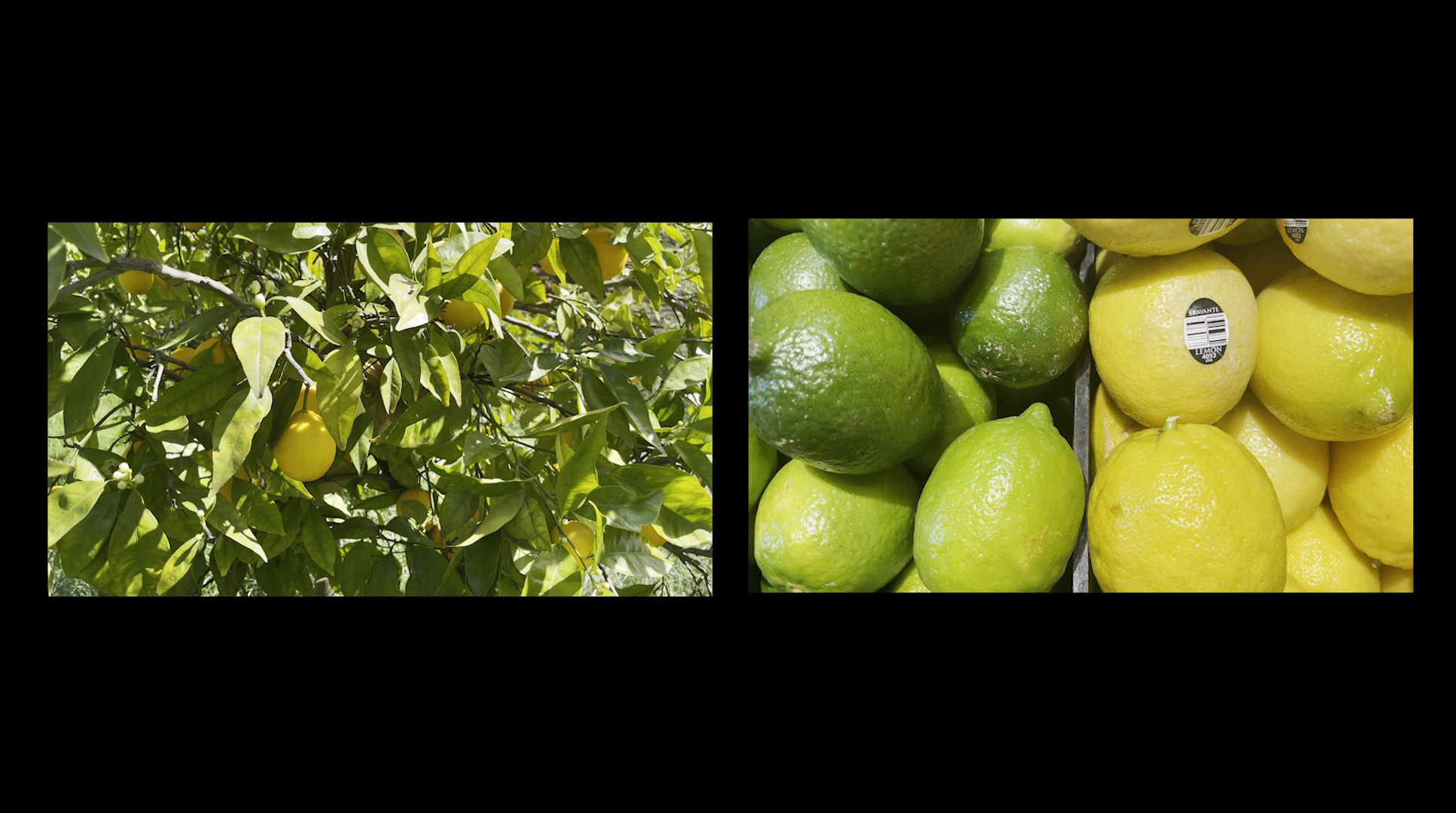
Images by Liz Helmin.
Filmic Explorations
This final assignment builds on class readings and asks students to further their understanding of ecology through a visual approach that critiques underlying assumptions, categories, and boundaries to reveal unseen aspects of our built and unbuilt environment.
Recent Work
Exhibition Showcases New Perspectives on UConn Forest
Vertical Studio Model Fosters Collaboration between Landscape Architecture Students
One Health Conference: Healthy Landscapes Case Studies Matrix
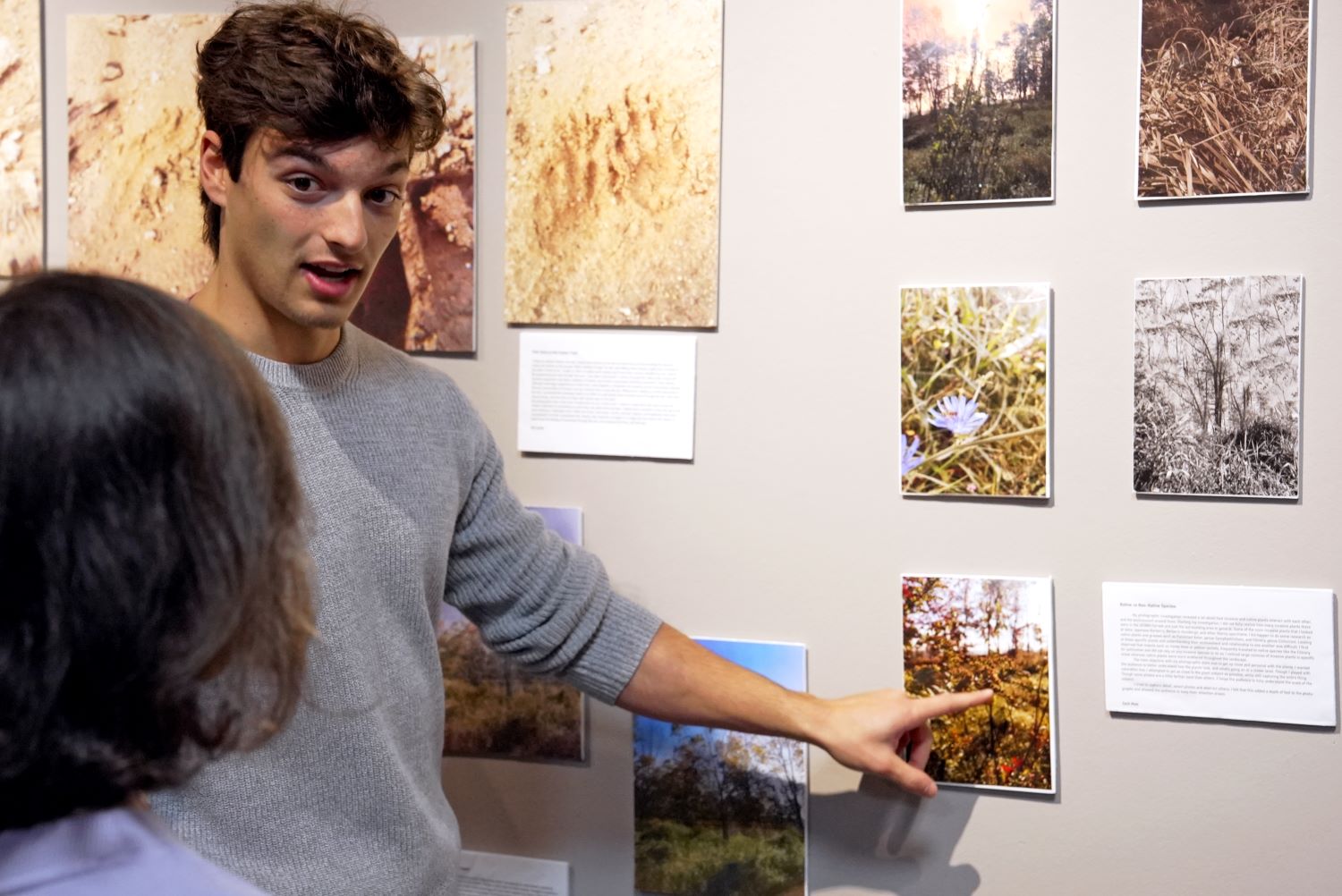
The exhibit, entitled Visualizing Forests, is the work of students in Graphics III (LAND 3130), a computer course offered by the Department of Plant Science and Landscape Architecture. This past fall assistant professor Julia Smachylo asked students to consider forests as socio-ecological systems, and investigate the complex relationships between the environment and human activity, including their maintenance and care as part of UConn’s campus.
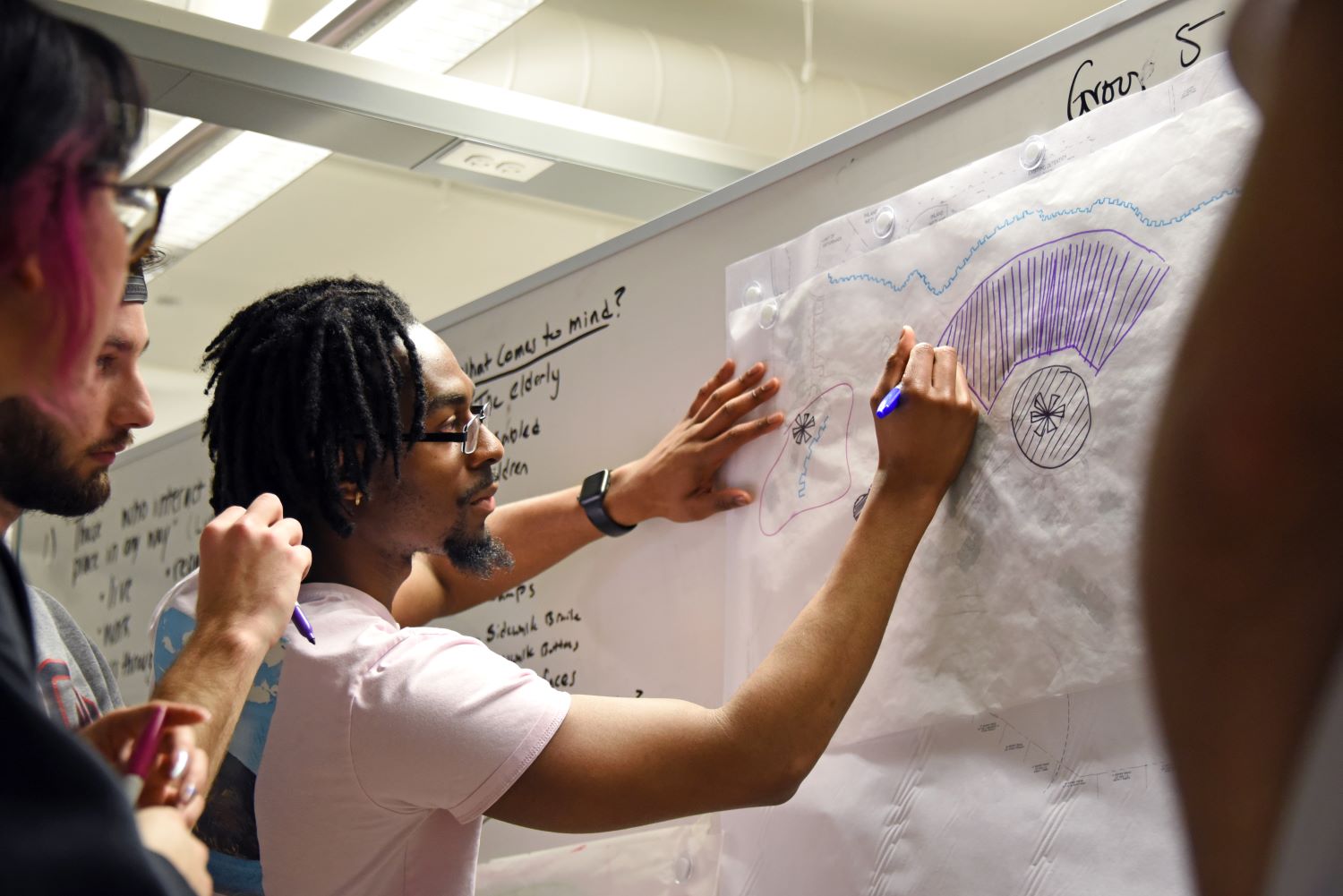
While a traditional approach to studio education has cohorts working on separate projects, a vertical studio model enables collaboration between students at various stages in their educational career to work side by side. This mimics the environment of professional designers who work across disciplines and experience levels where they can help and learn from one another.
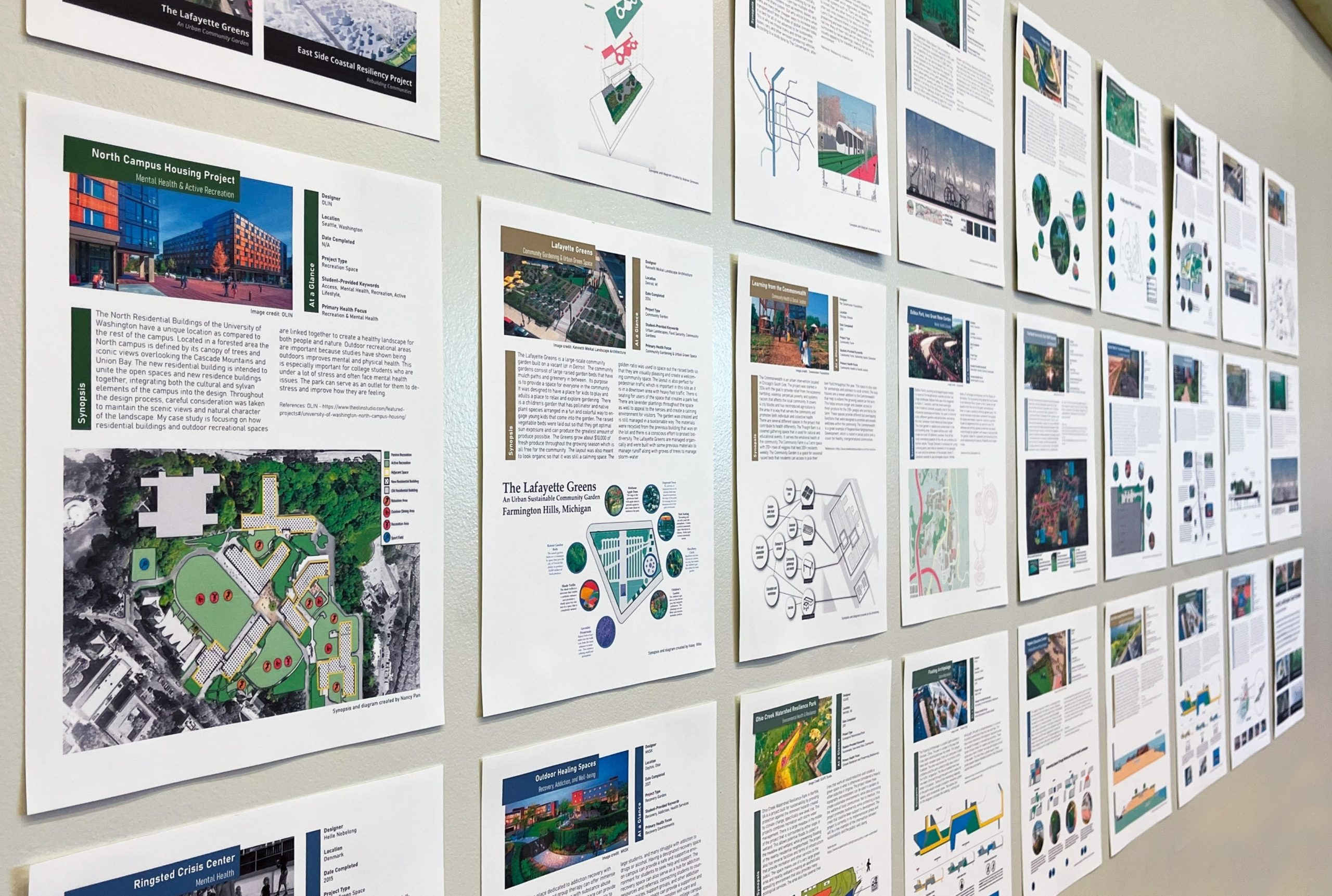
Student Healthy Landscape Case studies were showcased at the One Health Conference Monday, April 1, 2024. The sophomore and junior Landscape Architecture classes have been tasked with re-imagining UConn’s campus as a healthy landscape. Student projects draw from design case studies that have been grouped under the themes of Environmental Health & Resilience, Physical Health & Recreation, Community Health & Social Justice and Mental Health Support. This Healthy Landscapes Design Matrix highlights key themes from their case study analysis.